If you are dreaming about life on the water in Port Washington, it helps to know that you are not just buying a house with a nice view. You are often buying shoreline access, dock or mooring rights, insurance considerations, and a set of local rules that can shape how you use the property. When you understand those moving parts early, you can make a smarter decision and avoid expensive surprises later. Let’s dive in.
Why waterfront buying is different
Buying waterfront property in Port Washington is often a three-part decision. You are evaluating the home itself, the quality of the water access, and the long-term ownership responsibilities that come with a bayfront location.
That matters because two homes with similar views can offer very different practical value. One property may have a legal dock, usable frontage, and easier access to Manhasset Bay, while another may have more limitations tied to permits, shoreline conditions, or flood risk.
Port Washington location details matter
Port Washington is an unincorporated community in the Town of North Hempstead in Nassau County. Nearby waterfront villages, including Port Washington North and Manorhaven, make exact parcel boundaries especially important when you are reviewing permits, shoreline structures, and local requirements.
This is not a small detail. A property’s exact location can affect which local rules apply, what records you need to review, and how future dock or shoreline work may be handled.
What you are really buying
With waterfront property, the value often goes beyond the house and lot size. In Port Washington, buyers are often purchasing a bundle of rights and conditions tied to the shoreline.
That can include:
- Waterfront frontage
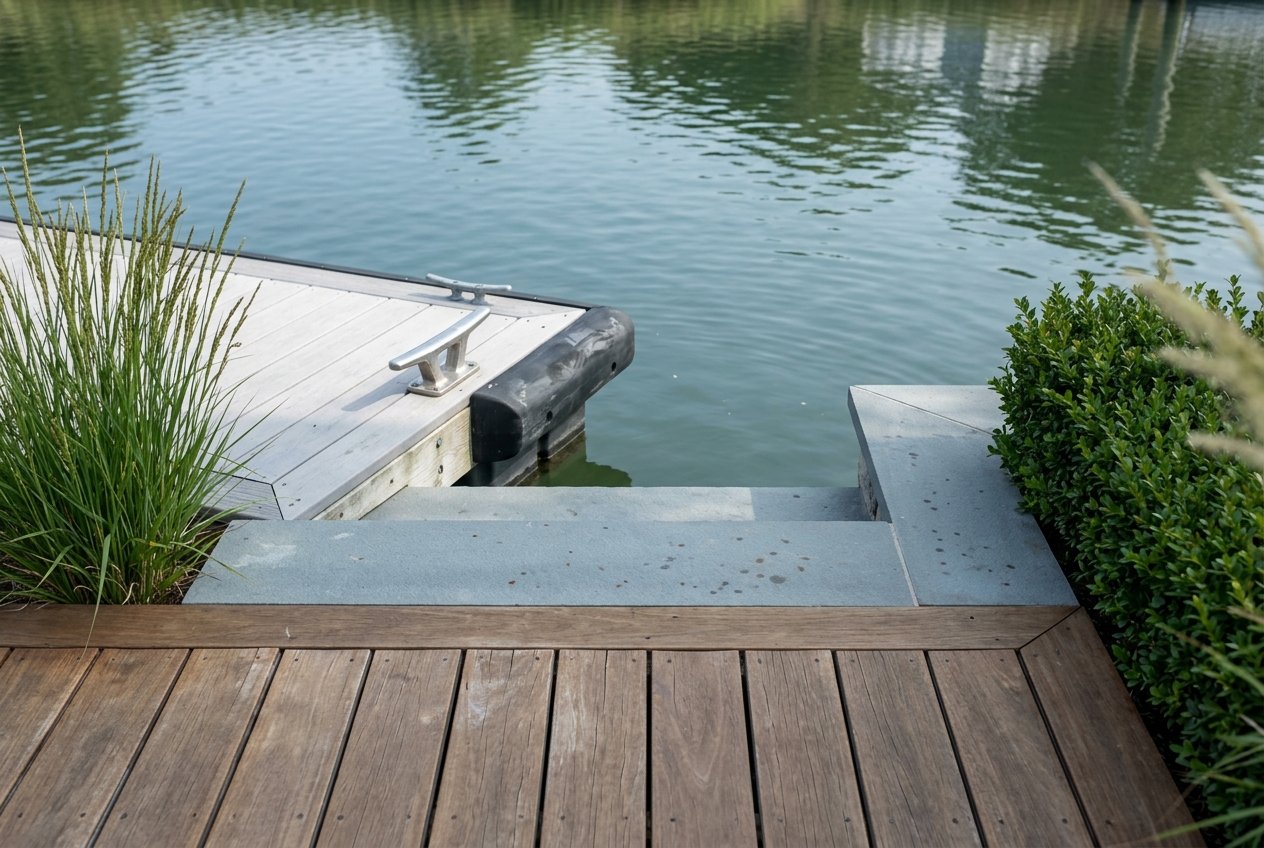
- Dock access
- Mooring rights
- Shoreline condition
- Bulkheads or stabilization structures
- Access to Manhasset Bay
The Town of North Hempstead regulates a wide range of waterfront structures. These include docks, piers, bulkheads, wharves, floats, platforms, revetments, jetties, utility lines, moorings, and swimming floats.
Because of that, you want to confirm what is actually included with the property, what is legally permitted, and what may require future review or updates.
Check dock legality early
One of the biggest waterfront due diligence steps is confirming the legal status of any dock, floating dock, slip, or mooring. You should not assume that an existing structure is fully compliant just because it is already there.
Town code states that an applicant for a waterfront structure permit must own the upland that directly abuts the mean high-water mark. That means ownership and shoreline relationship matter when it comes to maintaining or updating water-dependent structures.
If the property includes a permit for a dock or similar structure, ask to review the permit file as early as possible. You should also request any related survey, engineer documents, and inspection history.
Understand transfer rules
Permit transfer is a critical detail for Port Washington waterfront buyers. Town rules allow permits to be transferable, but the new owner must file a change of name within six months after the title transfer.
If that does not happen, the permit terminates automatically. For a buyer, this makes post-closing follow-up just as important as pre-closing review.
In simple terms, a waterfront closing should not be treated like the finish line. You also need a clear plan for what paperwork must be updated after title changes hands.
Know common dock limits
Local code sets standards that can affect how much dock infrastructure a residential parcel can support. In general, residential lots with less than 100 feet of shoreline frontage are limited to one dock or floating dock per lot, and a single-family parcel generally may have no more than two slips.
The Town also sets width and setback standards. In addition, waterfront structures may not unreasonably interfere with navigation, neighboring rights, or public use of shorefront and underwater lands.
These rules are important if you plan to keep a boat, add a structure later, or compare two waterfront properties with different shoreline layouts. What looks possible in person may not always align with current code.
Review moorings and swimming floats
If a property includes a mooring or a swimming float secured to underwater land, the Town requires a mooring permit. This is another area where buyers should verify documentation instead of relying on informal understanding.
A mooring can add real lifestyle value, especially in a waterfront market tied closely to Manhasset Bay boating access. Still, the benefit only becomes clear when you know the permit status and any conditions attached to it.
Expect state review near the shoreline
Town review is only part of the picture. New York State Department of Environmental Conservation oversight may also apply, especially if the property is near regulated tidal wetlands or in a coastal erosion hazard area.
Projects near regulated wetlands may require a tidal wetlands permit. Work in a coastal erosion hazard area may require a coastal erosion management permit.
This matters whether you are planning repairs, upgrades, or future improvements. Even if a structure already exists, proposed changes can trigger a different level of review.
Small repairs and bigger changes are different
Not all dock work is treated the same way. According to DEC guidance, replacing broken boards on a functional dock does not require a permit, but changing the dock’s length, width, or position does.
For new dock or mooring structures, DEC may also require a water-depth survey. That is one reason waterfront buyers should think beyond the current appearance of a dock and ask what would be involved if they want to modify it later.
Add wetlands checks to your due diligence
A title review and survey review should include a wetlands check. DEC states that official tidal wetlands maps are on file at DEC regional offices and in the Nassau County Clerk’s office.
If a property falls near a mapped wetland or erosion hazard area, that can affect your future plans, maintenance approach, and overall carrying costs. It is much better to identify that before you close than after you start planning improvements.
Plan for flood and storm insurance
Insurance is one of the most important waterfront budget items. Most homeowners insurance policies do not cover flood damage, so flood insurance is separate.
In communities that participate in the National Flood Insurance Program, federally backed mortgages on properties in high-risk flood zones require flood insurance. That is why buyers should verify the property’s exact flood zone rather than rely on assumptions based on proximity to the water.
You should also know that New York homeowners policies can include standard, windstorm, and hurricane deductibles. Coastal properties generally face greater storm-loss exposure, so it is wise to get both flood and wind quotes early in the buying process.
Use the exact property address
Flood risk can vary from one parcel to the next. Even homes on the same street can have different map designations, elevations, or insurance implications.
Before you make an offer, check the exact address and gather insurance pricing based on that specific property. This helps you budget accurately and compare waterfront options with a clearer picture of total monthly and annual ownership cost.
Budget for ongoing shoreline maintenance
The purchase price is only part of the financial story. Waterfront ownership in Port Washington often means planning for recurring maintenance tied to the shoreline, dock systems, drainage, and storm resilience.
The Town’s capital planning for the Town Dock area in Manhasset Bay has included dredging, seawall repair, bulkhead work, drainage, and resilience improvements. For buyers, that is a useful reminder that bayfront infrastructure often needs attention over time.
A private property owner may face similar realities on a smaller scale. If the home has a bulkhead, dock, or stabilization work along the shore, you should ask about condition, age, repair history, and likely future maintenance.
Questions to ask before you buy
A strong waterfront purchase starts with better questions. In Port Washington, some of the most useful ones are practical and highly specific.
Consider asking:
- Is the dock legal and currently permitted?
- Is the permit transferable, and what must be filed after closing?
- Does the property include a mooring permit if there is a mooring or swimming float?
- Does the current vessel reach navigable water at low tide?
- Is the bulkhead in good condition?
- Is the property in a tidal wetland or coastal erosion hazard area?
- Will the flood insurance quote reflect the exact flood zone and elevation?
- Are there survey, engineer, or inspection records available for review?
These questions can help you compare properties more accurately. They also give you a better sense of whether a home fits your lifestyle goals and your long-term budget.
How to buy with more confidence
The best Port Washington waterfront purchases usually happen when buyers stay disciplined. It is easy to focus on the view and the lifestyle, but the smartest move is to balance that excitement with careful review of permits, shoreline conditions, and insurance costs.
If you take the time to confirm legal status, check environmental and flood considerations, and understand what ongoing ownership may require, you can move forward with much more confidence. That is especially important in a market where the real value often sits at the intersection of home, water access, and compliance.
If you are thinking about buying waterfront property in Port Washington and want local guidance grounded in Long Island market experience, the McCooey-Olivieri Team can help you evaluate the details that matter most.
FAQs
What should you check before buying waterfront property in Port Washington?
- You should review the home, shoreline condition, dock or mooring status, permit records, flood insurance needs, and whether the property may be affected by tidal wetlands or coastal erosion rules.
Do docks in Port Washington need permits?
- Yes. Waterfront structures such as docks, piers, floats, bulkheads, and related installations are regulated by the Town of North Hempstead, and some shoreline work may also require state review.
Can a dock permit transfer to a new owner in Port Washington?
- Yes. Town rules allow transfer, but the new owner must file a change of name within six months of title transfer or the permit ends automatically.
Does a mooring need a permit in Port Washington?
- Yes. If a property includes a mooring or a swimming float secured to underwater land, the Town requires a mooring permit.
Is flood insurance required for waterfront homes in Port Washington?
- It may be. Flood insurance is separate from standard homeowners insurance, and federally backed mortgages in high-risk flood zones require flood insurance in participating communities.
Why do parcel boundaries matter for Port Washington waterfront homes?
- Port Washington’s waterfront area includes nearby incorporated villages such as Port Washington North and Manorhaven, so exact parcel location can affect permits, records, and local rules tied to the property.