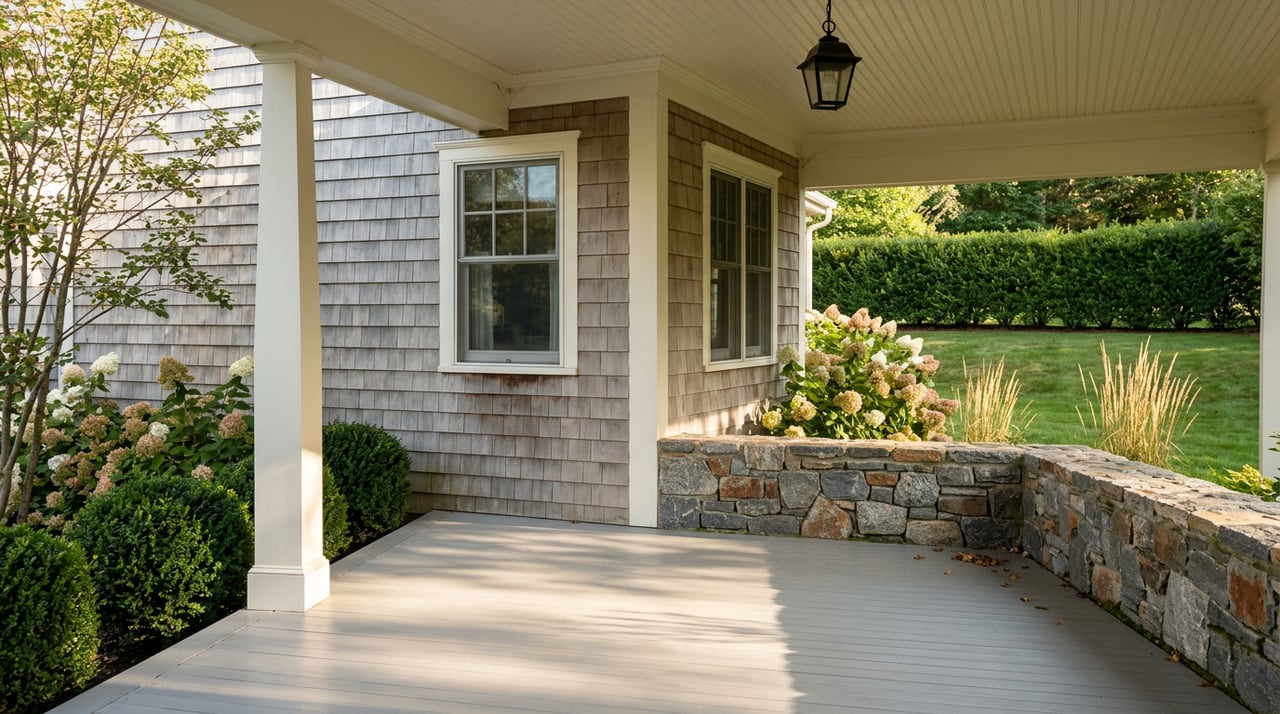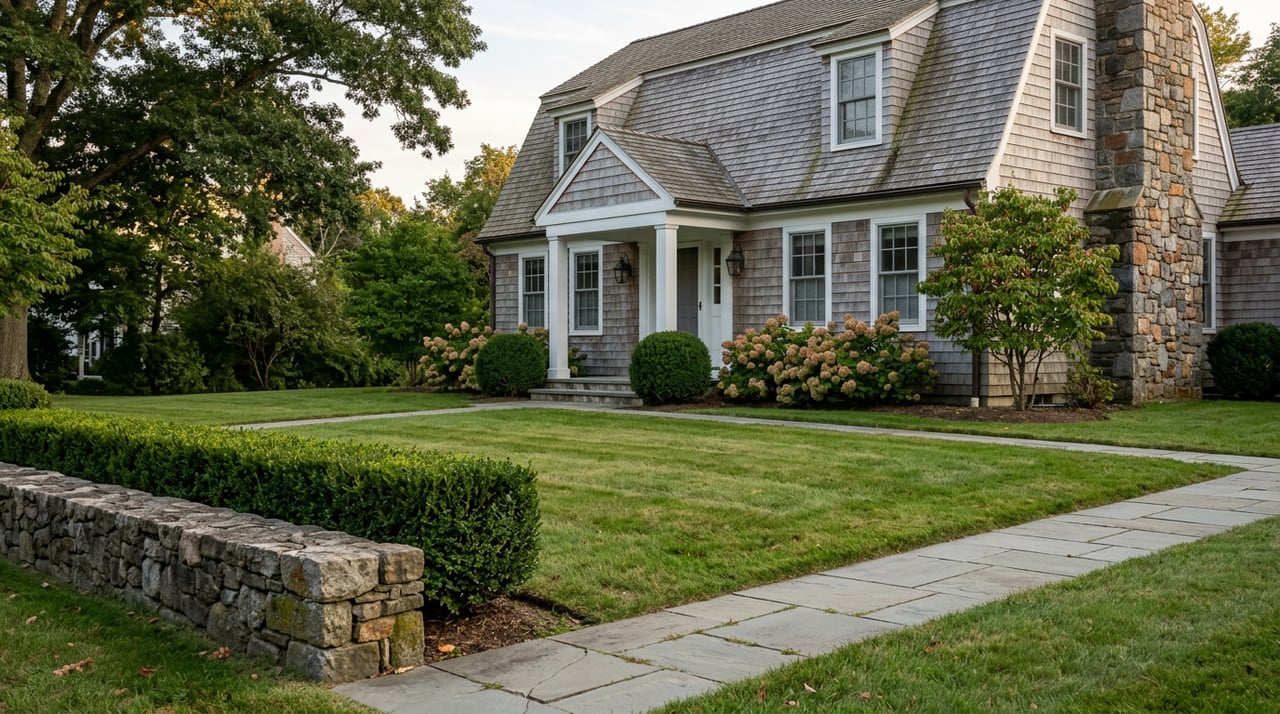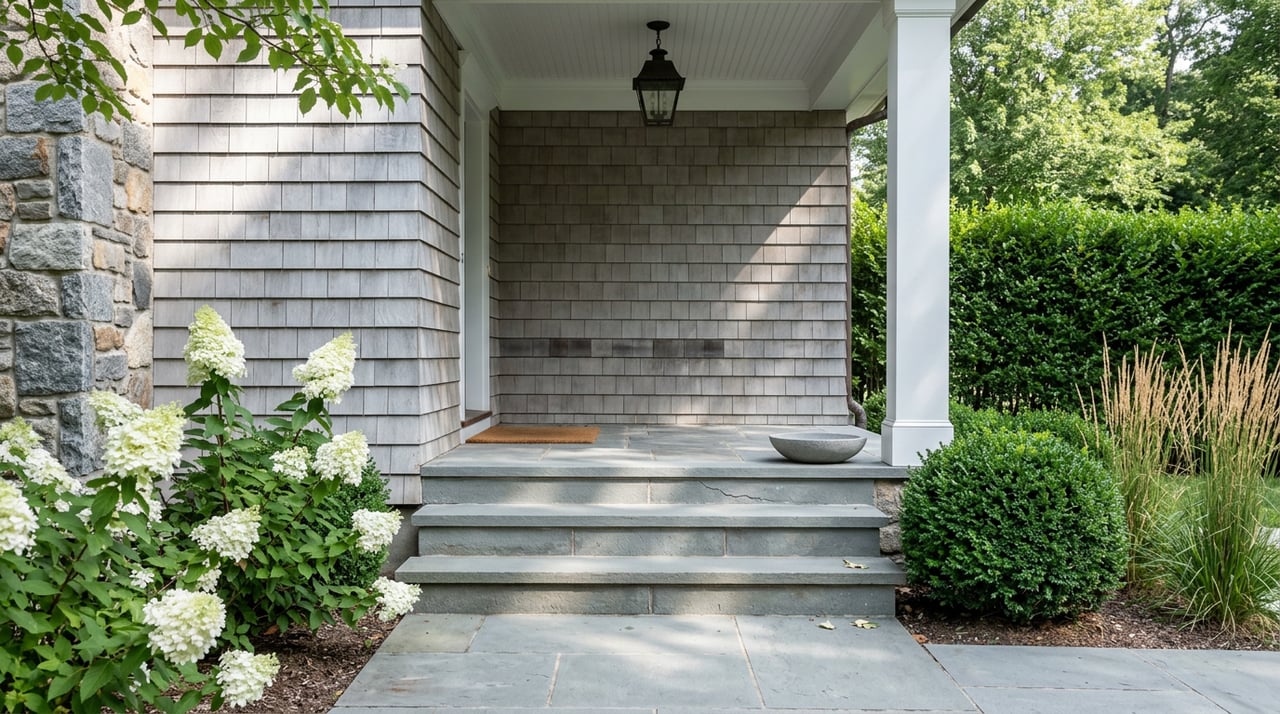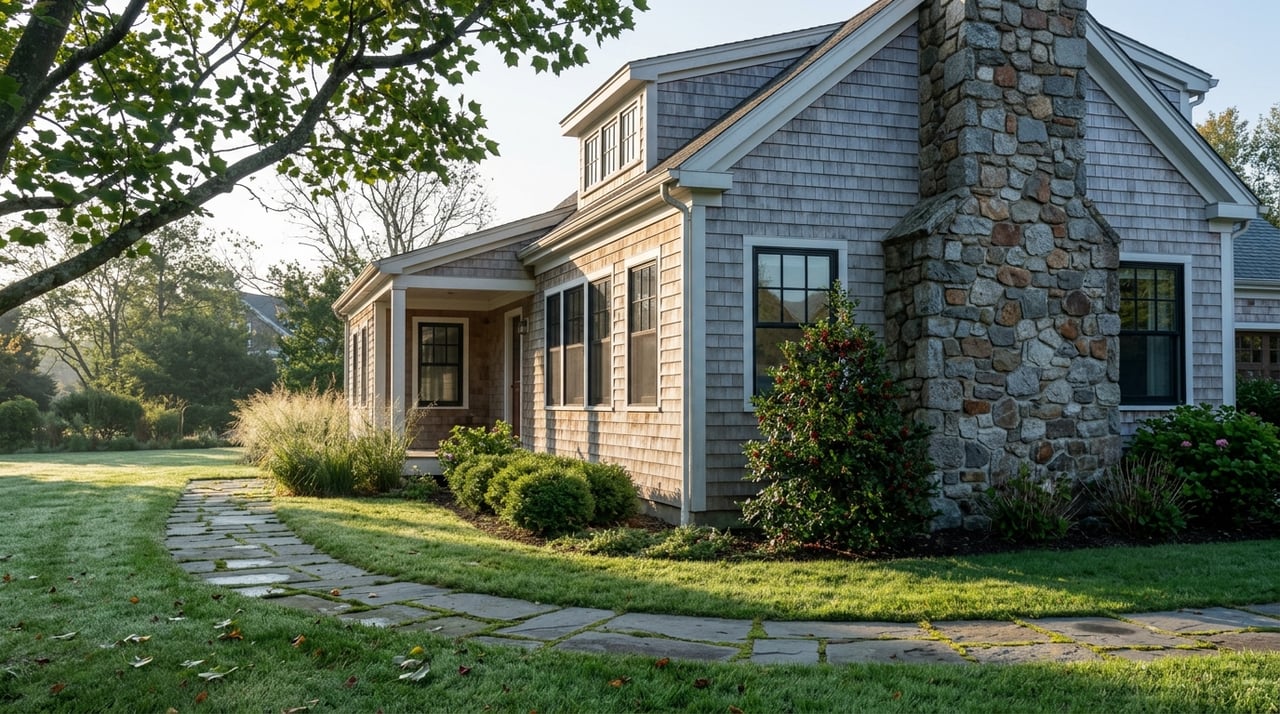
"A mortal sin in anyone's mind." That is how former Quogue Village Mayor George Motz described a proposal to tear down a 19th century home on Jessup Avenue, at a Design Review Board hearing this past Friday that ended with the board voting unanimously to deny the demolition.
If you are shopping for an older home in Quogue, or you already own one and are weighing a renovation, that vote is worth more to you than any median price you will find on a national portal. It tells you something the sale prices never will: what actually stands between a buyer and a shovel.
The house the board would not let go
The property at the center of the hearing is 107 Jessup Avenue, known locally as Jessup Manor. Abram Enos, a U.S. Navy Civil War veteran and the grandson of a free, formerly enslaved man, bought the land in 1899 and built a two-story house there. After Enos died in 1920, his daughter Tillie added a third floor and began running the building as the Shinnecock Arms, a boarding house that mainly housed domestic workers employed by summer visitors. In 1938, it was listed in The Negro Motorist Green Book, one of only three Long Island locations to appear in that guide.
The application before the board sought to demolish the structure. Village resident Barbora Sartorious pointed out that the applicants, identified in the hearing as Messina and Hyman, had filed two separate applications, one for demolition and one for new construction, a structure the Quogue Historical Society and a room full of neighbors read as an attempt to sidestep a fuller review. DRB member Paula Prentis wrote in the board's resolution that demolishing the home without a plan to replace it with something similar would impair the use, enjoyment, and value of the surrounding properties and harm the character of the neighborhood. Historical Society co-chair Pi Gardiner called it one of the most significant properties in the village. Serena Lee, a member of the Shinnecock Nation and a descendant of Enos's wife, Mary Nancy Lee, spoke about what it would mean to lose the house entirely.
The board sided with them. Application denied, unanimously.
The label everyone confuses with the actual rule
Here is where most buyers get the story backward. Quogue's historic pedigree is real. The village's National Register Historic District was recommended by the New York State Board for Historic Preservation in December 2015 and formally listed in February 2016, covering 248 contributing buildings that represent roughly 90 percent of the historic resources surveyed in the village. That is a serious body of architecture, spanning 18th century farmhouses through the freestanding summer cottages built between the 1880s and the turn of the century.
But the Quogue Historical Society, the organization that pushed for the designation, has been explicit about what it does not do. In its own materials describing the district, the society states that the designation imposes "no restrictions whatsoever" on an owner's right to alter or even demolish a historic home. The listing was created through voluntary community action, not a vote of the Village Trustees, and it carries no enforcement mechanism of its own.
So if the National Register listing has no teeth, what actually stopped a demolition on Jessup Avenue this month? The Village's own Design Review Board, operating under Article VIIA of the Quogue zoning code, a local law that has nothing to do with National Register status and applies to nearly every property in the village, landmarked or not.
| What buyers usually assume | What actually governs the property |
|---|---|
| "It's in the historic district, so there are rules" | The historic district itself carries no restrictions on alteration or demolition |
| "It's not individually landmarked, so I'm free to build" | The Design Review Board reviews almost any exterior alteration or new structure village-wide, regardless of landmark status |
| "The village just rubber-stamps applications" | The board can approve, modify, or flatly deny a project, as it just did |
The Jessup Manor decision did not hinge on the property's National Register status at all. It hinged on the DRB's own zoning authority to protect neighborhood character, a power that reaches every exterior project in the village, whether the house in question is a contributing landmark or a home built last decade.
How the board actually works
The DRB is a five member body appointed by the mayor with the approval of the Board of Trustees, serving three year terms with a two term limit. Under the village code, the board reviews the design of exterior alterations and new construction to prevent what the code calls a lack of coordination in building design that could adversely affect property values and neighborhood character. A committee handles initial review, and if that committee decides an application needs the attention of the full board, it goes to a public hearing, the same setting where the Jessup Manor case played out with public comment from more than half a dozen residents.
This is not a formality most buyers can skip by choosing a less visible lot. The board's own May 2025 hearing minutes, unrelated to Jessup Manor, show neighbors weighing in on details as granular as window mullions and porch depth for a new build on Quogue Street, with board members negotiating siding style and lighting plans directly with the applicant's architect. That is the level of scrutiny a typical exterior renovation or new construction project can expect, independent of whether the house has any historic designation at all.
What it costs you in time and money
Because Quogue is an incorporated village, building permits run through village government rather than the Town of Southampton. That keeps decisions local and staff accessible, but it also means a contractor familiar with Southampton's process is not automatically fluent in Quogue's. Local renovation cost estimates from early 2026 put labor and materials in Quogue at 20 to 35 percent above central Suffolk County, with a garage-to-apartment conversion running $75,000 to $155,000 and an outbuilding or carriage house conversion running $100,000 to $250,000, depending on condition and scope. Adding a dwelling unit, an accessory apartment above a garage or a converted outbuilding, typically requires separate septic approval from the Suffolk County Health Department for the added load, and lots near the Quogue Wildlife Refuge, wetlands, or coastal areas can trigger an additional environmental review before the Village Building Department will issue a permit.
None of this shows up in a listing description. It shows up months later, after a buyer has closed and started planning the addition they assumed was routine.
The sale data adds another layer worth understanding rather than just quoting. Reported median sale prices for Quogue have swung sharply within the same year, from around $2.6 million in February 2026 to more than $4.5 million by July 2026, depending on which data source and month you check. That is not a market correcting itself. It is what happens in a village where only a handful of homes change hands in any given month, so one large estate sale or one modest cottage sale can swing the median by seven figures. Days on market have moved in a similarly wide band, from roughly 70 days to just over 100 depending on the month. In a market this thin, a single renovation project that stalls in front of the Design Review Board is not a rounding error. It is a meaningful share of that month's activity.
What to do differently if you are buying to renovate
If your plan for a Quogue property includes anything beyond cosmetic interior work, build the DRB into your timeline before you build it into your budget. Ask the listing agent whether the current owner has any pending or prior DRB filings on the property, since a denied or amended application on record can tell you more about what the board will accept than the house's age ever could. Assume that even a home with no historic designation at all will still need design review for exterior changes, additions, or new construction, because that requirement is village-wide, not district-specific. And if your renovation plan leans toward removing mature trees, hedgerows, or stone walls to make room for a larger footprint, know that the village's own approval culture treats those existing landscape features as part of what it is trying to protect, not obstacles to clear.
A couple of questions worth asking before you write an offer
Does a house need individual landmark status for the Design Review Board to review my project? No. Under Article VIIA of the village code, almost any exterior alteration or new building in Quogue requires DRB approval, independent of whether the property carries any historic designation.
Is the permitting process in Quogue the same as in neighboring Southampton or Westhampton Beach? No. Quogue is its own incorporated village, so permits run through the Village Building Department and, when applicable, the Design Review Board, rather than through Town of Southampton channels. That keeps the process more personal, but it also means experience in a neighboring town's process does not automatically translate.
Buying or selling a home in a village where the real approval process is quieter than its historic reputation suggests takes someone who reads the zoning code as closely as the listing sheet. The McCooey-Olivieri Team works Quogue and the surrounding East End villages regularly, and can walk you through what a specific property's renovation or resale timeline actually looks like before you commit to either one. Schedule a complimentary local market consultation to start that conversation.